
Switch it to positive
Frinking coffee writing in my journal
Talking to the birds saying prayers’forstzrterd
U

FOR THE WOMAN WHO MISSES HER YOUNGER SELF — HERE IS HOW THE BUDDHA’S WISDOM GENTLY BRINGS YOU BACK TO PEACE
You catch your reflection in a mirror or a passing window…
And for a brief moment, you don’t recognize the woman looking back.
Your hand rises instinctively.
You pull your skin slightly, studying your face.
A quiet thought appears:
“I look so tired.”
And suddenly, you remember the girl you once were.
The smooth skin.
The endless energy.
The feeling that life stretched endlessly before you.
A soft sadness settles in.
The world whispers that you are fading.
But the Buddha’s wisdom offers a different truth:
You are not fading.
You are transforming.
🍂 THE BEAUTY OF RIPENING
In today’s world, aging is treated like something to fight.
Something to hide.
Something to correct.
Something to erase.
But in the Dhamma, aging is not a mistake.
It is a natural unfolding.
The Buddha did not see aging as decline.
He saw it as ripening.
Think of a green mango.
Smooth.
Firm.
Untouched.
Yet still hard and sour.
Now think of a ripe mango.
Its skin marked.
Its shape imperfect.
But inside?
Sweet.
Rich.
Complete.
You are not becoming less.
You are becoming full.
🌳 THE FLOWER AND THE ANCIENT TREE
The world teaches us to admire flowers.
Bright.
Soft.
Perfect.
But a flower’s beauty lasts only a season.
One strong wind, and it is gone.
The Buddha found awakening beneath a tree.
Not a flower.
A tree.
Look at an old banyan.
Its bark is rough.
Its surface lined and weathered.
Yet people stand beneath it with reverence.
Why?
Because it has endured.
Those lines are not damage.
They are evidence.
Evidence of storms survived.
Seasons endured.
Years lived fully.
Your wrinkles are not signs of loss.
They are the marks of your journey.
📜 A TRUTH THAT BRINGS FREEDOM
The Buddha encouraged this reflection:
“I am of the nature to grow old. I have not gone beyond aging.”
This truth is not meant to create fear.
It is meant to bring relief.
Because when you stop fighting what is natural…
You stop creating unnecessary suffering.
You stop trying to remain who you were.
And begin embracing who you have become.
🐾 A QUIET REALIZATION
When life becomes difficult, people don’t seek flowers for shelter.
They seek something steady.
Something rooted.
Something strong enough to remain standing when storms arrive.
Your loved ones do not need you to stay young forever.
They need your wisdom.
Your presence.
Your compassion.
Your depth.
They need the shade of the tree you have become.
💛 A SMALL PRACTICE FOR TODAY
The next time you stand before a mirror, pause.
Instead of searching for what has changed…
Notice what has remained.
Touch the lines beside your eyes and say:
“These came from laughter, from love, from moments worth remembering.”
Touch your forehead and say:
“These came from the nights I cared, worried, protected, and persevered.”
Then remind yourself:
My face has not been ruined.
My face has been lived in.
I am not becoming less beautiful.
I am becoming more real.
Do not spend your life trying to erase your story.
Wear it.
Quietly.
Gracefully.
Proudly.
Like a crown that only time can create.
buddhism
aging
selfacceptance
wisdom
FOR THE WOMAN WHO MISSES HER YOUNGER SELF — HERE IS HOW THE BUDDHA’S WISDOM GENTLY BRINGS YOU BACK TO PEACE
You catch your reflection in a mirror or a passing window…
And for a brief moment, you don’t recognize the woman looking back.
Your hand rises instinctively.
You pull your skin slightly, studying your face.
A quiet thought appears:
“I look so tired.”
And suddenly, you remember the girl you once were.
The smooth skin.
The endless energy.
The feeling that life stretched endlessly before you.
A soft sadness settles in.
The world whispers that you are fading.
But the Buddha’s wisdom offers a different truth:
You are not fading.
You are transforming.
🍂 THE BEAUTY OF RIPENING
In today’s world, aging is treated like something to fight.
Something to hide.
Something to correct.
Something to erase.
But in the Dhamma, aging is not a mistake.
It is a natural unfolding.
The Buddha did not see aging as decline.
He saw it as ripening.
Think of a green mango.
Smooth.
Firm.
Untouched.
Yet still hard and sour.
Now think of a ripe mango.
Its skin marked.
Its shape imperfect.
But inside?
Sweet.
Rich.
Complete.
You are not becoming less.
You are becoming full.
🌳 THE FLOWER AND THE ANCIENT TREE
The world teaches us to admire flowers.
Bright.
Soft.
Perfect.
But a flower’s beauty lasts only a season.
One strong wind, and it is gone.
The Buddha found awakening beneath a tree.
Not a flower.
A tree.
Look at an old banyan.
Its bark is rough.
Its surface lined and weathered.
Yet people stand beneath it with reverence.
Why?
Because it has endured.
Those lines are not damage.
They are evidence.
Evidence of storms survived.
Seasons endured.
Years lived fully.
Your wrinkles are not signs of loss.
They are the marks of your journey.
📜 A TRUTH THAT BRINGS FREEDOM
The Buddha encouraged this reflection:
“I am of the nature to grow old. I have not gone beyond aging.”
This truth is not meant to create fear.
It is meant to bring relief.
Because when you stop fighting what is natural…
You stop creating unnecessary suffering.
You stop trying to remain who you were.
And begin embracing who you have become.
🐾 A QUIET REALIZATION
When life becomes difficult, people don’t seek flowers for shelter.
They seek something steady.
Something rooted.
Something strong enough to remain standing when storms arrive.
Your loved ones do not need you to stay young forever.
They need your wisdom.
Your presence.
Your compassion.
Your depth.
They need the shade of the tree you have become.
💛 A SMALL PRACTICE FOR TODAY
The next time you stand before a mirror, pause.
Instead of searching for what has changed…
Notice what has remained.
Touch the lines beside your eyes and say:
“These came from laughter, from love, from moments worth remembering.”
Touch your forehead and say:
“These came from the nights I cared, worried, protected, and persevered.”
Then remind yourself:
My face has not been ruined.
My face has been lived in.
I am not becoming less beautiful.
I am becoming more real.
Do not spend your life trying to erase your story.
Wear it.
Quietly.
Gracefully.
Proudly.
Like a crown that only time can create.
buddhism
aging
selfacceptance
wisdom
We are often called “the elderly,” but that quiet label hides a truth most people rarely pause to consider—we are the last living witnesses of a world that no longer exists.

Look closely at us and you might see gray hair, slower steps, or the quiet patience that time teaches. But if you truly listen to our story, you will realize something extraordinary. We are not simply older people moving through the final chapters of life. We are the survivors of a breathtaking transformation in human history, a generation that walked from the slow rhythm of an analog world into the dazzling speed of a digital one without losing our sense of humanity along the way.
Our journey began in a very different world.
Many of us were born in the 1940s, 1950s, and early 1960s, when the scars of World War II were still fresh and the world was trying to rebuild itself. Cities were rising again from rubble, families were learning how to hope after years of uncertainty, and childhood unfolded in ways that would feel almost unrecognizable to younger generations today.
Our toys were simple.
We played marbles in dusty yards and hopscotch on cracked sidewalks. We gathered around kitchen tables to play checkers and cards while the smell of dinner filled the house. When the streetlights flickered on in the evening, it was the universal signal that childhood adventures were over for the day and it was time to go home.
There were no smartphones.
No streaming videos.
No endless scroll of digital distractions.
Instead, we built our memories in the real world—with scraped knees, laughter echoing down neighborhood streets, and friendships that formed face to face.
Music became one of the defining soundtracks of our youth.
The 1960s and 1970s arrived like a wave of color and rebellion. We watched as culture shifted around us, carried by electric guitars and voices that dared to question the world. For many of us, gatherings like the legendary Woodstock Festival of 1969 symbolized something powerful: the belief that peace, music, and community could reshape the future.
Hundreds of thousands of young people stood together in muddy fields, listening to artists who poured raw emotion into towering speakers known as the Wall of Sound. Those concerts were not just entertainment—they were moments when strangers felt like a single generation singing the same hope under an open sky.
Education looked different then too.
Our notebooks were filled with handwritten notes carefully copied from chalkboards. Research required patience, libraries, and stacks of heavy books rather than a quick internet search. We learned to slow down and think through ideas because information did not arrive instantly.
Mistakes were corrected with erasers and ink.
Not with the click of a “delete” button.
Love also carried a different rhythm.
We fell in love while vinyl records spun on turntables and cassette tapes clicked softly inside plastic players. Music became the background to first dances, long conversations, and dreams about the future. Those relationships grew into marriages, families, and lives built step by step through the 1980s and 1990s, decades that saw technology begin to reshape the world around us.
Yet nothing compares to the bridge our generation has crossed.
We are the only generation to have experienced an entirely analog childhood and a fully digital adulthood.
We remember waiting days—or sometimes weeks—for handwritten letters to arrive in the mail. We remember rotary telephones and party lines where neighbors could accidentally overhear conversations. Communication required patience and anticipation.
Today, we can see the face of a loved one across the ocean instantly on a screen small enough to fit in a pocket.
The world changed in ways few could have imagined.
We watched humanity land on the Moon in 1969, a moment when millions of people sat in living rooms staring at black-and-white televisions as Neil Armstrong took humanity’s first steps on another world. We saw the rise of personal computers, the birth of the internet, and eventually the arrival of smartphones that placed entire libraries of knowledge in our hands.
Machines that once filled entire rooms now exist on devices lighter than a paperback book.
We moved from punch cards and mechanical tools to artificial intelligence and global networks connecting billions of people instantly.
And through every shift, we adapted.
Our bodies carry the marks of the times we lived through as well.
We grew up during fears of polio and tuberculosis, illnesses that once terrified entire communities before vaccines helped bring them under control. We witnessed the global challenges of pandemics and health crises across decades, including the recent silence and uncertainty of COVID-19, which reminded the world that resilience is still required in every generation.
Science itself transformed before our eyes.
We saw the discovery of the structure of DNA, the decoding of the human genome, and the early steps into gene therapy and advanced medicine. Transportation evolved from simple bicycles and steam engines to hybrid vehicles and electric cars gliding almost silently through city streets.
Few generations have witnessed such sweeping change.
And yet, despite everything that evolved around us, certain things remain unchanged.
We still understand the joy of a cold glass bottle of lemonade on a hot afternoon.
We still remember the taste of vegetables picked straight from a garden.
We still know the value of a long conversation that unfolds slowly without a keyboard or screen interrupting it.
Our memories stretch across decades.
We have celebrated births, mourned losses, watched friends depart, and carried their stories forward. Those who remain share something rare: the experience of standing at the crossroads of history, holding memories from a world that younger generations know only through photographs and stories.
But we are not relics.
We are living bridges.
Our perspective reminds the modern world that progress does not have to erase wisdom. The speed of technology does not have to replace patience, kindness, or reflection. We remember what life felt like before everything moved so fast—and that memory carries quiet lessons worth sharing.
So when someone calls us “elderly,” we can smile.
Because behind that word lies something extraordinary.
We are the generation that crossed two centuries, witnessed eight decades of transformation, and walked from the age of handwritten letters to the era of artificial intelligence.
What a life we have lived.
What a remarkable story we continue to carry.
And if you belong to this generation, take a moment today to look in the mirror and recognize something powerful.
You are not simply growing older.
You are living history.
You are part of a generation that will always remain one of a kind.
And perhaps, in the quietest and most meaningful way, you are becoming legendary.
WE ARE THE GENERATION THAT WON’T COME AROUND AGAIN:
The generation that walked to school — and walked home.
The generation that finished homework fast just to get outside and play.
The generation that spent every spare minute in the street with friends.
The generation that played hide and seek until it was too dark to see.
The generation that carried thick wallets stuffed with real photos.
Now everything we own lives somewhere in a cloud.
The generation that made mud pies.
The generation that traded sports cards.
The generation that gathered empty Coke bottles, returned them for a few cents, and turned that into a Mountain Dew and a candy bar.
The generation that built paper toys with our own hands.
The generation that bought vinyl records to spin on a turntable.
The generation that filled albums with pictures and newspaper clippings.
The generation that pulled out board games and cards when the rain kept us inside.
The generation whose TV signed off at midnight with the national anthem.
The generation that had parents who were present.
The generation that whispered and laughed under the blankets so Mom and Dad wouldn’t know we were still awake.
That generation is fading, and it won’t be back.
I wouldn’t trade growing up when I did for anything ✌️✌️😎
Am I superstitious?

Some days. Not all the time.
Best, Jay
Tallulah is a family name that has passed down through generations of female children
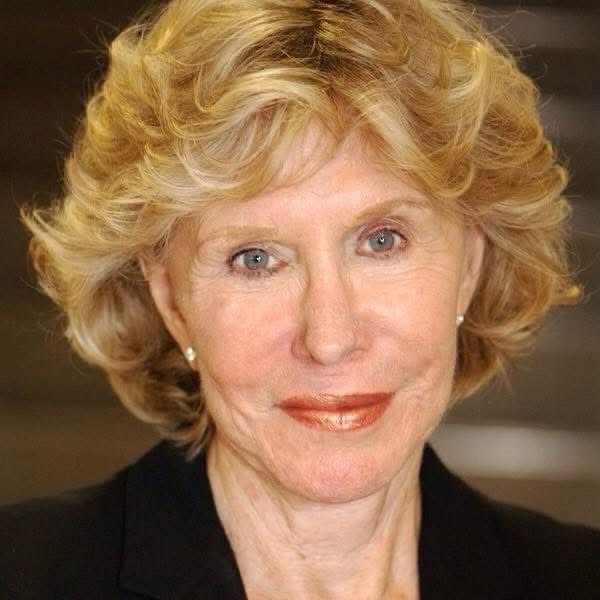
I love the name and thought about using it as opposed to Janet
But my parents called me Janet so I used it.
Names are interesting to me
Best, Jay

